


Why Are There So Many Iguanas in Florida?
If you've spent any time in South Florida, chances are you've seen a green iguana sunbathing on a seawall, darting across a road, or even climbing into someone's backyard. These large lizards have become such a common sight that many visitors assume they're native to Florida. Spoiler alert- they're not.
So, how did Florida become home to millions of green iguanas?
Green Iguanas Aren't Native to Florida
Green iguanas naturally live in the tropical rainforests of Central and South America, along with parts of the Caribbean. They first arrived in Florida through the exotic pet trade during the 1960s and 1970s. While some were intentionally released when owners could no longer care for them, others escaped from outdoor enclosures during storms and hurricanes.
With Florida's warm climate and abundant vegetation, the iguanas found the perfect place to thrive.
Why has the iguana population increased in Florida?

Unlike many animals, green iguanas have very few natural predators once they reach adulthood. Large adults can grow over five feet long and weigh more than 15 pounds, making them difficult prey for most native wildlife. During a Florida Outdoors Company iguana hunting excursion, a hunter was able to capture a 6' 1" long iguana. See photos of the hunts here.
Several other factors have helped their population grow:
Florida's tropical climate closely matches their native habitat.
Plenty of food is available year-round, including flowers, fruits, vegetables, and ornamental plants.
Few predators survive to keep adult populations in check.
Rapid reproduction allows populations to grow quickly. A single female can lay dozens of eggs in one nesting season.
Together, these conditions have created one of the largest invasive iguana populations in the United States.
Why Are Iguanas a Problem?
While they may look fascinating, green iguanas can cause significant problems for homeowners, businesses, and Florida's environment.
Their burrows can undermine sidewalks, seawalls, canal banks, and building foundations.
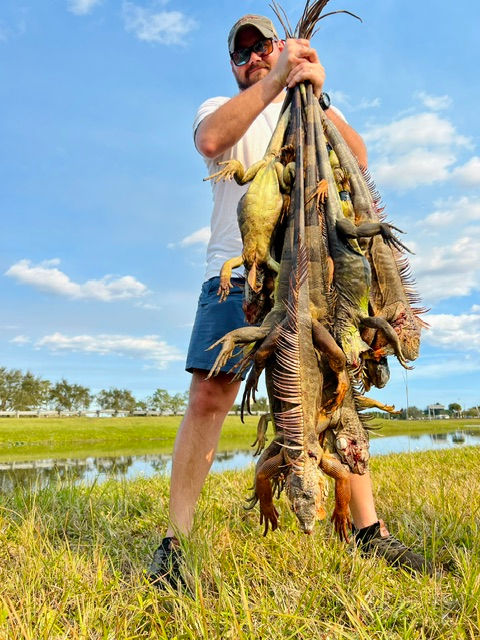
They also consume landscaping, gardens, and ornamental plants, often causing thousands of dollars in property damage each year.
Perhaps most importantly, green iguanas compete with native wildlife for habitat and resources. As an invasive species, they disrupt Florida's delicate ecosystems, which evolved without them. To read more about the problems iguanas cause to Florida's native wildlife, click here.
What Is Florida Doing About It?
Because green iguanas are not native and can damage both property and ecosystems, Florida encourages their humane removal on private property with the landowner's permission. Wildlife agencies continue to educate the public about preventing further spread and reducing established populations.
Managing invasive species is an important part of protecting Florida's native wildlife for future generations.
Our Commitment to Conservation

At Florida Outdoors Company, every iguana hunt is about more than just an exciting day outdoors, it's about helping protect Florida's unique environment.
By humanely removing invasive green iguanas, we help reduce pressure on native wildlife, protect local habitats, and minimize damage to homes, businesses, and waterways. Conservation is at the heart of what we do, and every hunt contributes to the ongoing effort to preserve the natural beauty that makes South Florida so special.
Whether you're looking to experience an unforgettable hunt or simply want to learn more about Florida's incredible wildlife, we're proud to be part of the solution, one iguana at a time.
To join us on an unforgettable iguana hunting excursion, book now to reserve your spot on the South Florida canals.


Comments